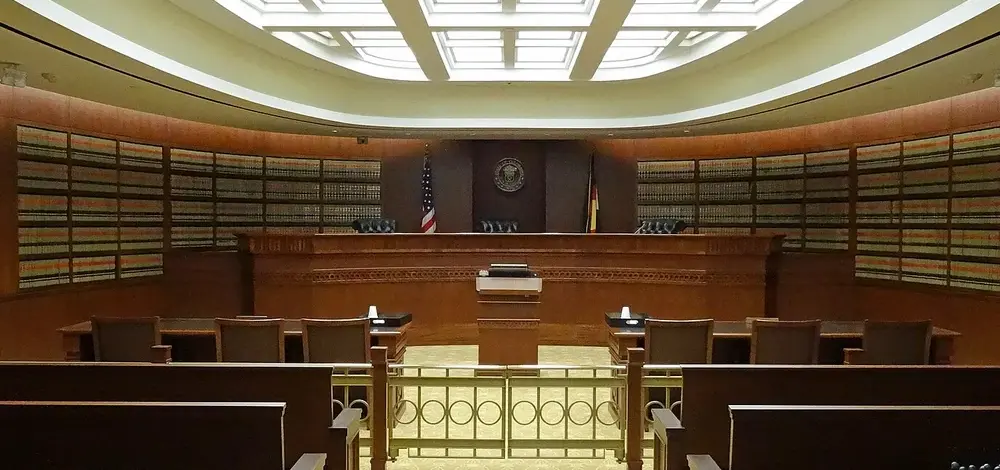
Yes. A debt collector or debt buyer can file a lawsuit over an unpaid consumer debt, and it happens routinely. The part that decides the outcome is not whether they sue — it is whether you file a written answer by the deadline on the summons. Most debt lawsuits end in a default judgment because the person served never responds, and a default judgment is what turns a debt into a wage garnishment or a frozen bank account.
What a lawsuit actually looks like
Not a courtroom drama. A sequence of paperwork:
- You are served with a summons and complaint — in person, or by whatever method your state permits. Sometimes it arrives taped to a door, which is how people miss it.
- A deadline starts running. Typically 20 to 30 days, but it varies by state and by court, and the exact number is printed on the summons. This is the single most important date in the process.
- You file a written answer, responding to each numbered allegation and raising any defenses.
- The case proceeds — usually to negotiation and a settlement or a payment order, sometimes to a hearing. Very few reach trial.
- If you do not answer, the collector wins by default, without proving anything.
That fifth step is the whole game. A default judgment is granted because nobody contested the claim, not because the claim was strong. It is also the normal outcome rather than the exception: reviewing the jurisdictions that publish usable data, the Pew Charitable Trusts found that courts resolved more than 70% of debt collection lawsuits with default judgments for the plaintiff over the decade it examined, and that fewer than 10% of the defendants studied had a lawyer.
What a judgment lets them do
Once a judgment exists, the collector has enforcement tools it did not have before:
- Wage garnishment. Under federal law the cap for ordinary consumer debt is the lesser of 25% of disposable earnings or the amount above 30 times the federal minimum wage — $217.50 a week at $7.25. Several states are more protective, and a few — including Texas, Pennsylvania, North Carolina and South Carolina — largely prohibit wage garnishment for consumer debt. See whether your wages can be garnished.
- Bank levy. A judgment creditor can freeze and take funds from an account.
- A judgment lien against real property in many states.
- Post-judgment interest, at a rate set by state law, which can be substantial over years.
- Renewal. Judgments last years and are typically renewable, so this does not simply expire.
That escalation is why answering matters even when you owe the money and cannot pay it. Answering keeps the case a negotiation. Not answering hands over the enforcement tools.
The check to run first: is the debt too old to sue over?
Every state has a statute of limitations on suing over a debt — commonly three to six years, varying by state and by type of contract. Once it has run, the debt is time-barred: still owed, still reportable, but no longer enforceable in court.
And this matters more than almost anything else on this page, because collectors do file suit on time-barred debt. Under federal rules, suing or threatening to sue on time-barred debt is prohibited — but the prohibition only helps you if you raise it. An expired statute of limitations is an affirmative defense: the court will not notice it for you. Miss the answer deadline on a time-barred debt and you get a judgment on a debt that was legally unenforceable.
Two traps:
- A payment can restart the clock in many states. Never make a “good faith” payment on an old debt to buy goodwill before checking.
- The applicable period may not be your state’s. Cardholder agreements often specify another state’s law, and courts do not treat that uniformly.
Check whether the debt is too old to sue over before you talk to anyone about paying.
Why it is usually a company you have never heard of
Because your original creditor sold the account. After roughly 180 days of non-payment, a card issuer charges the account off and frequently sells it to a debt buyer for a fraction of face value. The buyer is who sues.
That fact creates the most common real defense in these cases: the plaintiff has to prove it owns the debt and that the amount is right. Debt bought in bulk sometimes arrives with thin documentation — no signed agreement, no statement history, a chain of assignment with gaps. This is not a technicality to be embarrassed about raising. It is the plaintiff’s burden. It is also why the name on the summons is usually one you have never dealt with: what the debt buyer has to establish is the unbroken chain from your original issuer to itself, and that chain is the part most often missing from a bulk purchase.
You can also demand written validation of a debt within 30 days of a collector’s initial communication. It does not need to be elaborate: a short letter, sent by certified mail with a return receipt, asking for the name of the original creditor, the account number, the amount claimed and the collector’s authority to collect it. Collection has to pause until they respond. Note the sequence: validation is a pre-lawsuit right. Once a suit is filed, the answer deadline governs and validation does not pause it.
What to actually do if you have been served
In this order, and the order matters:
- Write the answer deadline on the calendar. From the summons, not from an internet article.
- Do not call the collector first. Anything you say about the debt can be used, and an acknowledgment can affect the limitations analysis in some states.
- Check the statute of limitations for your state and the account’s last activity date.
- File an answer, even a simple one. Most courts have a form. Denying the allegations you do not know to be true and raising limitations if applicable is enough to keep the case alive.
- Look for free legal help. Legal aid organizations and law school clinics handle consumer debt cases, and many state courts have self-help centers. This is one of the areas where free representation is genuinely available.
- Then negotiate. Collectors settle lawsuits regularly, often for less than the claim, and your position is dramatically better after answering than before. See settling before the court date.
Full walkthrough: the step-by-step response to a summons.
The option that stops the case entirely
Filing bankruptcy triggers the automatic stay, which halts the lawsuit immediately — before judgment, and in many cases it can undo a garnishment already in progress. That is not a reason to file, but it is a reason not to treat a lawsuit as the end of the road. If you are being sued because the total debt is genuinely beyond what you can repay, the lawsuit is a symptom and filing addresses the whole.
410 out of 324,326: what the federal record says about getting money back
People served with a debt lawsuit often reach for the Consumer Financial Protection Bureau, on the reasonable assumption that a federal complaint is a route to compensation. We pulled every debt collection complaint in the bureau’s public database for the twelve months to September 1, 2026 to see what actually happens to them. There were 324,326. 410 of them closed with monetary relief — that is 0.13%, or roughly one in 791.
That is not the same as saying complaints do nothing. 70,176 closed with non‑monetary relief, which in this category usually means a tradeline corrected, an account recalled from a collector, or collection activity stopped. That is 21.64%, and it is the outcome worth aiming at. But 239,681 — 73.9% — closed with an explanation and nothing else.
The contrast that makes the number mean something is the same database, same twelve months, different product. Among 92,805 credit card complaints, 13,322 closed with monetary relief: 14.35%. So a complaint about the bank that issued your card is 113.6 times more likely to end in money than a complaint about the company collecting on it. The system is the same; the counterparty is not. A debt buyer has no ongoing relationship with you to protect and no card portfolio to defend.
The practical reading for someone holding a summons: the complaint is worth filing, and it is worth filing about the right thing — the tradeline, the validation failure, the calls — but it is not a defense, it is not a counterclaim, and it does not pause the answer deadline on the summons. Those two clocks are unrelated, and only one of them ends with a judgment against you.
| Outcome | Debt collection | Share | Credit card | Share |
|---|---|---|---|---|
| Closed with monetary relief | 410 | 0.13% | 13,322 | 14.35% |
| Closed with non-monetary relief | 70,176 | 21.64% | 11,193 | 12.06% |
| Closed with explanation | 239,681 | 73.90% | 64,479 | 69.48% |
| Untimely response | 7,190 | 2.22% | 218 | 0.23% |
| In progress at retrieval | 6,869 | 2.12% | 3,593 | 3.87% |
| Total | 324,326 | 100% | 92,805 | 100% |
How we counted, and the four things this does not tell you
Both figures come from one query each against the bureau’s public complaint API, filtered by product and by a fixed twelve‑month window of receipt dates, and read from the response’s own outcome aggregation. We confirmed the aggregation respects the product filter by checking that its buckets sum to the filtered total — they do, to within the 0.103% of complaints the bureau records without a state.
One number needs a caveat rather than a limit: 7,190 debt collection complaints, 2.22%, were recorded as an untimely response, against 0.23% for credit cards. Collectors miss the bureau’s own response deadline nearly ten times as often. That is a measured difference in how the two kinds of company treat the process, and it is the one place where the collection column looks worse rather than merely smaller.
| Source | Consumer Financial Protection Bureau, public Consumer Complaint Database, via its documented search API |
|---|---|
| What we asked it | One request per product, filtering on product and on a fixed receipt-date window, reading the outcome counts from the response’s own company_response aggregation. No sampling and no interpolation. |
| Data as of | Complaints received 1 September 2025 to 1 September 2026 |
| Retrieved | September 2, 2026 |
| Assumptions | Shares are ours, computed as bucket over filtered total; the bureau publishes counts, not rates; complaints still open at retrieval are left in the denominator rather than dropped |
| How to repeat it | Filter the public database by product and date range and read the “company response” breakdown; the counts are the bureau’s own and should match to the day of retrieval. |
What this does not say.
- A complaint is a complaint, not a finding. Nothing here says the collector broke the law, and nothing here says it did not.
- “Monetary relief” is the bureau’s own label and it has no floor. A closure worth twelve dollars counts the same as one worth twelve thousand, and the database does not publish amounts.
- These are complaints about collection, not lawsuits. The federal courts and the bureau do not share a case number, so no row here can be matched to a suit filed against a named person.
- The comparison holds products constant, not people. Someone with a card complaint may simply have a live account and more leverage, and that difference is not something this data can separate from the conduct of the company.
Frequently asked questions
How long does a debt collector have to sue you? Your state’s statute of limitations, commonly three to six years from the last activity or default depending on the state and the contract type. After it expires the debt is time-barred and suing on it is prohibited — but you generally have to raise that as a defense, or a judgment can still be entered against you.
What happens if you ignore a debt lawsuit? The court enters a default judgment for the amount claimed, plus costs and often attorney fees and interest. That judgment unlocks wage garnishment, bank levies and property liens. Ignoring the suit is the single worst response available — worse than answering badly.
Does filing a CFPB complaint stop a debt lawsuit? No. They are separate processes on separate clocks, and the complaint does not extend the answer deadline printed on your summons. A complaint is still worth filing about the underlying conduct, but of 324,326 debt collection complaints in the twelve months to September 2026, 410 closed with any money changing hands.
How likely is it that a collection agency will sue? It varies with the balance, your state, and whether the account was sold or kept in-house. Larger balances are litigated more often, and debt buyers file selectively where the paperwork is good. The more useful framing is that the probability stops mattering once you have been served: what decides the outcome then is the answer deadline, not the odds of getting there.
What is the “7-7-7 rule” for debt collection? The rule people are reaching for is the 7-in-7 presumption in the federal collection rule: a collector is presumed to violate the limit on repeated contact if it calls about a particular debt more than seven times in seven consecutive days, or within seven days of speaking to you about it. It governs phone calls, not lawsuits.
Can I go to jail if a debt collector sues me? No. A debt lawsuit is a civil case and unpaid consumer debt is not a crime. What does put people in custody is ignoring a later court order in the case — a subpoena or an order to appear about your assets — so open every envelope from the court after a judgment.
Can a debt collector take money from my bank account? Not without a judgment. With one, yes, through a bank levy or garnishment, subject to your state’s exemptions and to the federal rule that protects two months of directly deposited Social Security and similar benefits from being frozen.
Should I answer the lawsuit myself or get a lawyer? Filing an answer yourself is far better than filing nothing, and courts publish forms for it. But consumer debt defense is one of the areas with real free help available — legal aid, court self-help centers, law school clinics — and it is worth one phone call before deciding to go it alone.
This article explains how debt collection lawsuits work in general terms. It is not legal advice, and civil procedure, garnishment limits and limitations periods are set by state law and vary substantially. Deadlines in a lawsuit are strict; if you have been served, get advice specific to your state and court — free help is often available.
Sources
- CFPB — What should I do if a debt collector sues me?
- FTC — Fair Debt Collection Practices Act, 15 U.S.C. §1692
- Pew Charitable Trusts — “How Debt Collectors Are Transforming the Business of State Courts” (May 2020), on default judgments in debt claims
- CFPB Regulation F — 12 CFR 1006, time-barred debt provisions
- Consumer Financial Protection Bureau — Consumer Complaint Database, debt collection product, complaints received September 1, 2025 to September 1, 2026 (accessed 2026-09-02)
- Consumer Financial Protection Bureau — Consumer Complaint Database API documentation (accessed 2026-09-02)
Information, not advice. How we calculate, source and review this — and what we do not do — is set out on our methods and sourcing page.